
Adventure, Trekking
Climbing Kilimanjaro Gear Guide: The Essential Packing Strategy for High Altitude Success
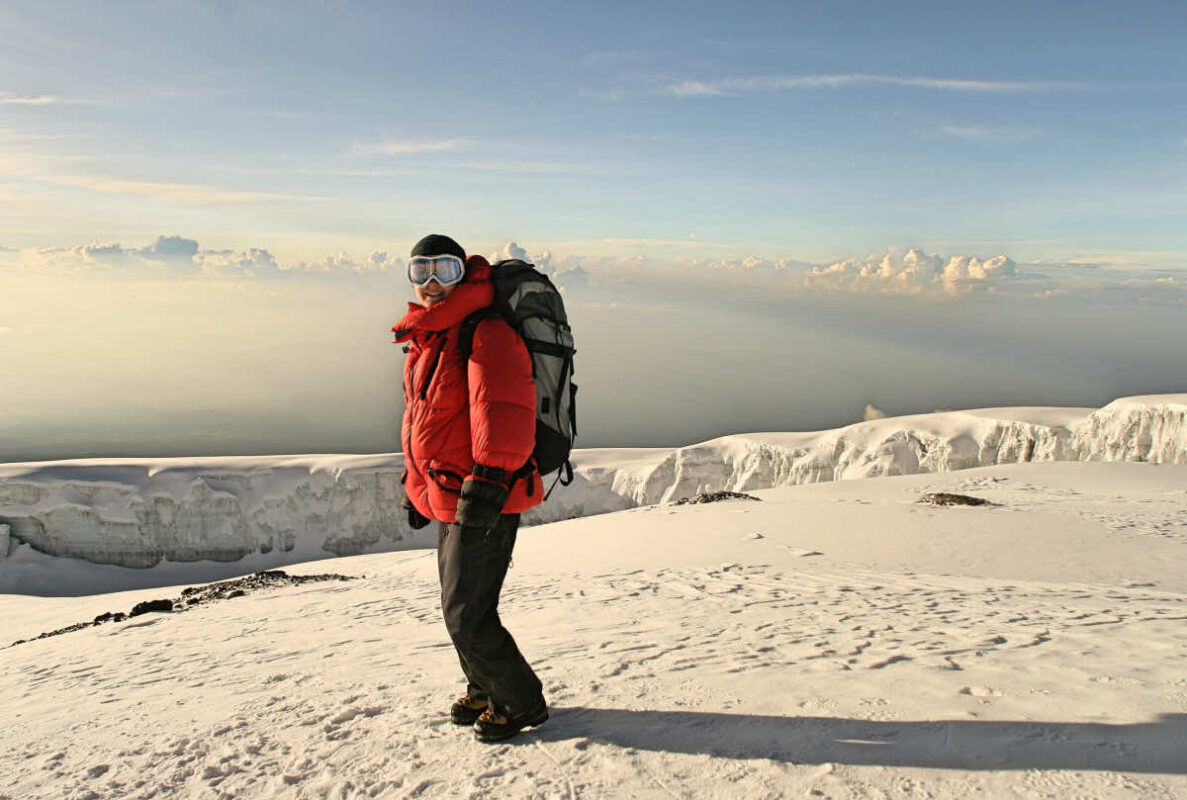
If you are preparing for climbing Kilimanjaro, I’ll be honest with you, your summit success depends more on smart layering and altitude-ready systems than brute fitness. Climbing Kilimanjaro moves through five climate zones in under a week. You will start in humid rainforest and finish in most probably arctic wind chill at nearly 6,000 meters. The volcano is not technically difficult, but is It is environmentally demanding and you need to prioritise warmth, moisture control, and weight efficiency.
It’s important to keep in mind that on Mount Kilimanjaro, you transition from humid rainforest to sub-zero alpine desert within days so your base layer must regulate moisture efficiently; merino wool or high-grade synthetics are essential to keep skin dry and temperature stable
Then over this, comes a breathable mid-layer which provides active insulation, your outer insulation layer, ideally an expedition-grade down jacket rated for sub-zero conditions and a fully waterproof, breathable shell protecting you against sudden rain or snow. So, your kilimanjaro packing list should be right.
Mental Preparedness and Altitude Discipline
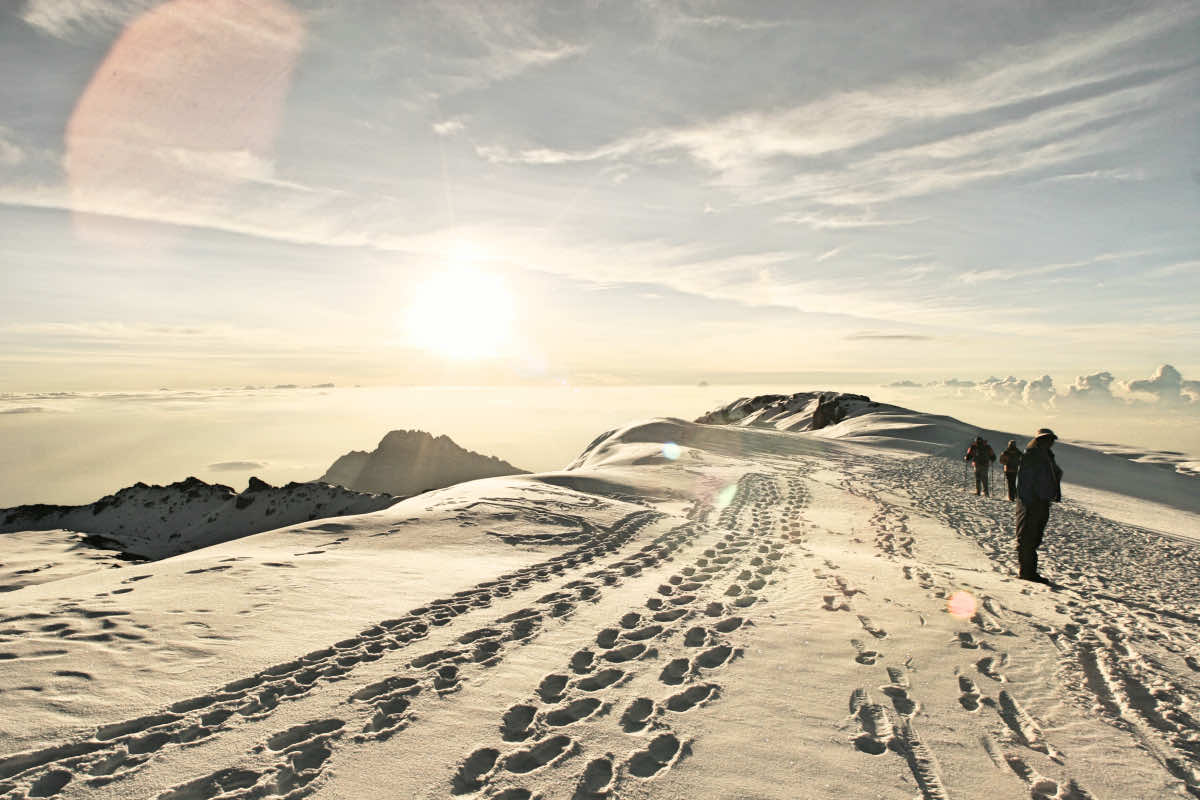
Climbing Kilimanjaro is an altitude challenge, not a technical mountaineering test. The guiding principle on the mountain is steady pacing. Walking slowly allows you to acclimatise while preserving oxygen efficiency.
Mental patience becomes your core asset, particularly during the long summit night ascent. Pace yourself. Make small steps. Stop on occasions, but stay on your two feet when catching your breath. Controlled breathing, measured steps, and emotional composure will shape your success. Toughness here is measured in slowness, not speed.
Footwear: Your Summit Foundation
Boot selection is critical. It determines stability on the trail, on steep sections and on your way back to lower altitude as well as your long-term comfort. A solid mid- to high-ankle trekking boot with reliable waterproofing like Goretex with a Vibram sole support is critical, especially for volcanic scree (which will feel like walking on sand dunes).
Preserve oxygen efficiency! Moving slowly allows the body to acclimatise and your boots must be fully broken in before arrival to prevent blister formation during the long days of trekking.
Finally, sock systems should prioritise merino fibers for moisture management and insulation. On summit night, it’s going to be below zero, especially from October to January so thicker thermal socks provide additional protection against the freezing conditions.
Pack Structure
Weight management during your climb is a strategic decision. To me, a well-fitted daypack should carry items including water, insulation layers, nutrition, and safety essentials. Carry a 40 day pack and bring one larger duffel bag that will be carried by porters – don’t overpack as weight must remain within regulated limits. Even if you’re tempted to add more stuff, overpacking increases fatigue and diminishes efficiency at altitude. Efficiency in packing translates directly into conservation of energy.
Cardio and High-Altitude Preparation
When I trained for Kilimanjaro, I quickly realised that my legs and lungs are what would carry you to the summit, especially above 5,000 meters where every breath feels thinner.
Your routine should focus on running long slow runs to build endurance, hill sprints to strengthen my legs, and stairs to simulate steep climbs. Interval training becomes your secret weapon, forcing your lungs to work harder so your body can handle the oxygen drop at high altitude.
I also recommend mixed in hikes with a weighted backpack, which helped me get used to the feeling of carrying gear while pushing uphill. By the time you’ll approached summit night, your cardio training should allow you to maintain a steady pace, conserve energy, and actually enjoy the incredible landscapes (stars and moon on your summit push day) of Mount Kilimanjaro
Step into smarter fitness with compact, foldable treadmills.
Hydration at Altitude
At altitude, if you wait to feel thirsty, you are already behind. As you climb higher, respiration rate increases due to reduced oxygen availability, causing accelerated fluid loss through breathing alone. The cold dry air further intensifies dehydration without obvious sweat signals. Even mild fluid deficit thickens the blood, reduces oxygen transport efficiency, and amplifies symptoms of acute mountain sickness such as headache, nausea, and fatigue.
Remember to get consistent water intake, ideally 3 to 4 liters daily, supported by electrolytes to maintain circulation, support acclimatization, and to preserve your cognitive clarity during summit push (preventing pink elephant sightings at Uhuru peak).
NEW ARRIVAL: Hydrate+
Offers Optimal levels of Electrolytes with Zero Sugar, Zero Stevia & No Artificial Sweeteners.
Hydrate+ is the optimal balance of Sodium, Potassium, Magnesium, Calcium, Vitamin B12, Vitamin C, and the amino acid L-Taurine, to rapidly replenish essential minerals for effective hydration, fluid balance, energy, focus, muscle performance, endurance, and recovery.
My intake
I climbed the mountain a few times and Kilimanjaro only rewards those who prepare with precision. Remember that proper layering, sturdy and lightweight footwear, hydration strategy, and weight discipline create a stable platform for altitude performance.
The mountain does not require technical expertise, but it demands that you pack with intention, prioritise function over aesthetics, and approach altitude with equipment that support endurance on the trail, not compensate for poor preparation or lack of training.
Share to a friend
